Learning to stop a little earlier.
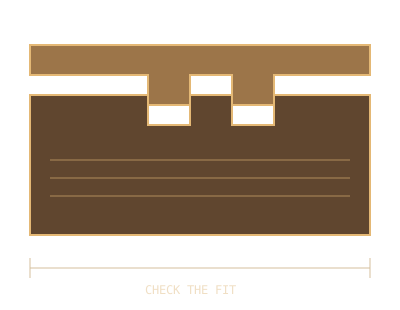
What the bench has taught me
I came to woodworking through repairs. A loose chair rung needed attention, a shelf needed shortening, and a drawer refused to run without a shove. Each job asked for a different kind of patience. Eventually I bought a proper square, cleared a corner of the basement, and started making things that were small enough to finish.
Milwaukee winters make an indoor hobby particularly welcome, though I keep the work comfortably within the space I have. I favor hand tools because I like the pace and because the bench shares a house with other people. The tools are not a philosophy. They are simply a good fit for this room and my evenings.
I buy modest amounts of timber and keep useful offcuts in a shallow crate. The crate has a strict edge: if a piece does not fit, I have to decide what it is for. That rule has prevented a few impressive imaginary projects and produced several practical little objects instead. The best material is often the piece I already understand.
I do not sell plans or present myself as a qualified instructor. These pages are personal notes about what I tried, what worked, and what I would change. The most useful lesson so far is to stop removing material while there is still something left to adjust. A tight fit usually has more options than an enthusiastic gap.